
Programme Calendar
Programme Calendar
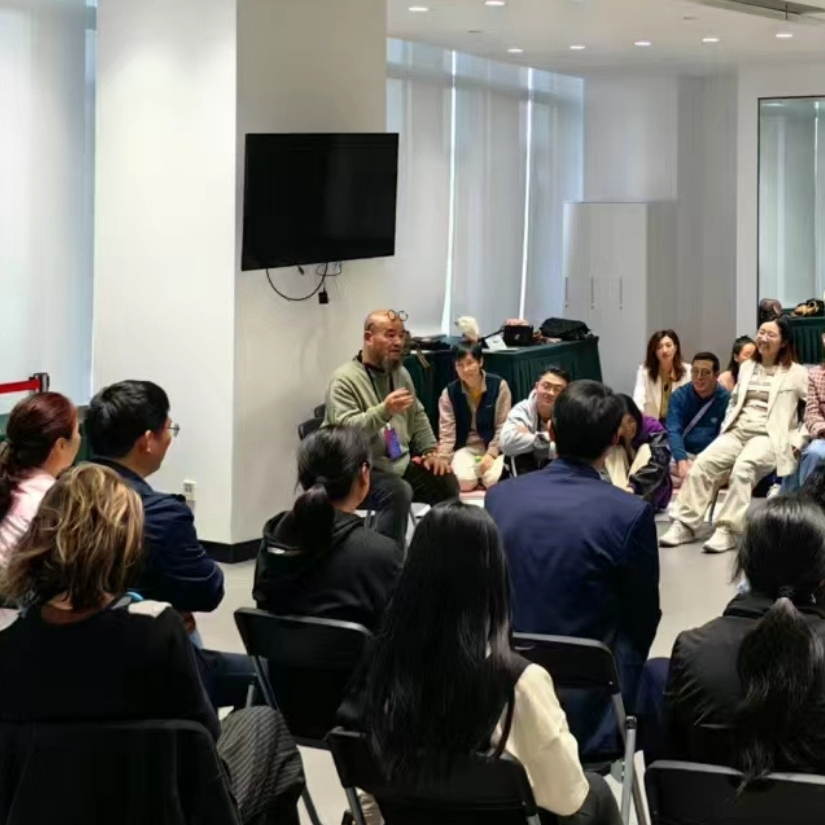
Read Faces, Read Minds: Boost Your Social Intuition and Empathy
 16 Apr 2026, 2:00 PM - 3:30 PM (GMT+8:00)
 Connection Room 11
In psychology, the face is a holographic map of one's personality and traits.
If you can quickly read the signals on someone's face, it will greatly enhance your intuition and empathy in social interactions—ultimately boosting your advanced social skills.
With over 20 years of experience in psychology, "Teacher Huang Psychology Online:Teacher Huang (Huang jianhe)" shares three tips to help you read faces and understand people, boosting your social and professional abilities.
Listening to the Consciousness Within
16 Apr 2026, 2:00 PM - 3:30 PM (GMT+8:00)
The Sanctuary Foyer
Participants will learn how to develop awareness of the body’s internal signals and explore how consciousness manifest physically.
Interactive exercises will introduce ways to observe and understand the body’s natural feedback systems.

Sound | Exploring a Multisensory Approach to Wellbeing
16 Apr 2026, 2:00 PM - 3:00 PM (GMT+8:00)
Town Hall
Sound is increasingly present in wellness spaces yet the mechanisms through which it affects us, and the full scope of its applications, remain only partially mapped.
In this session Eren offers to explore sound not simply as a tool for relaxation, but as a precise medium for engaging the body’s sensory and regulatory systems. Drawing on both scientific understanding as well as contemporary and traditional approaches to sensory cultivation, this session offers a structured yet experiential space to investigate how sound can open access to deeper human capacities. It is particularly relevant for those interested in sound healing, embodiment, therapeutic practice, and the emerging intersections between neuroscience, perception, and wellbeing.

Jyoti Tratak: Candle Gazing Meditation
16 Apr 2026, 3:00 PM - 4:00 PM (GMT+8:00)
Inspiration Room2
Jyoti Tratak is a powerful and advanced concentration (dhāranā) practice in yoga that involves steady gazing at a flame. The word comes from Sanskrit: "Jyoti" means light, and "Tratak" means to gaze steadily Without blinking eyes. It is known for strengthening the eyes, calming the mind, improving focus, memory, and willpower, and preparing the mind for meditation.
Step-by-Step Instructions
Stage 1: Bahir Trataka (External Anchoring)
1. Settle In: Sit in front of the flame, relax your body, and take a few deep breaths.
2. Steady Gaze: With both eyes open, gently and softly fix your gaze on the top part of the flame's luminous tip (just above the blue part at the wick/candle, the brightest steady point). Avoid staring at the wick itself.
3. Be Motionless: Keep your body, head, and eyes completely still. Blink as little as possible, but do not force them open. If you need to blink in the beginning, it's okay.
4. Full Attention: Let your entire awareness be absorbed in the flame. Observe its qualities: color, shape, movement, luminosity. When the mind wanders, gently bring it back to the flame.
5. Duration: Gaze for a pre-determined time. For beginners: 1-3 minutes is ample. As you practice, you can extend to 5-10 minutes. Never strain.
Stage 2: Antar Trataka (Internal Visualization)
1. Close Eyes Gently: After your gazing time, slowly and softly close your eyes.
2. Observe the Afterimage: You will see a vivid, inverted afterimage of the flame against your dark eyelids. It might be white, blue, or golden.
3. Hold the Image: Concentrate on this internal image. Try to keep it stable and centered between your eyebrows (at the Ājñā Chakra or third eye point). As it fades, try to recall it.
4. Duration: Hold the internal image for as long as it lasts naturally, or up to the same time you spent gazing externally.
Stage 3: Integration & Palming (Sensory Rest)
1. Let Go: Once the afterimage completely fades, let go of all effort. Keep your eyes closed.
2. Palming: Rub your palms together vigorously until they are warm. Gently cup your palms over your closed eyes without touching the eyelids. Feel the soothing darkness and warmth. Breathe deeply. This is called "palming" and is essential to relax the eye muscles.
3. Integration: Sit quietly for a minute, observing the calmness in your mind and the relaxation in your eyes.
· Subtle Effects: You may experience increased clarity, calmness, or occasional purification responses (like watering eyes),This is normal.
Precautions
· Severe depression or epilepsy (can affect neurological pathways).
· Recent eye surgery or acute eye infections.
· Severe mental agitation. In such cases, do simpler breath awareness first.
May your practice be steady and illuminating.
-Joyti-Tratak-Candellight-Meditation2-1000x1000.png)